Focus Area 3

Relationships with Children and Behaviour Guidance and Support

Build positive, respectful relationships with children and young people and help them build respectful relationships with others.

Approx Duration1h
Structure13 Lessons

Relationships with Children and Young People, Including Behaviour Guidance and Support

About this course

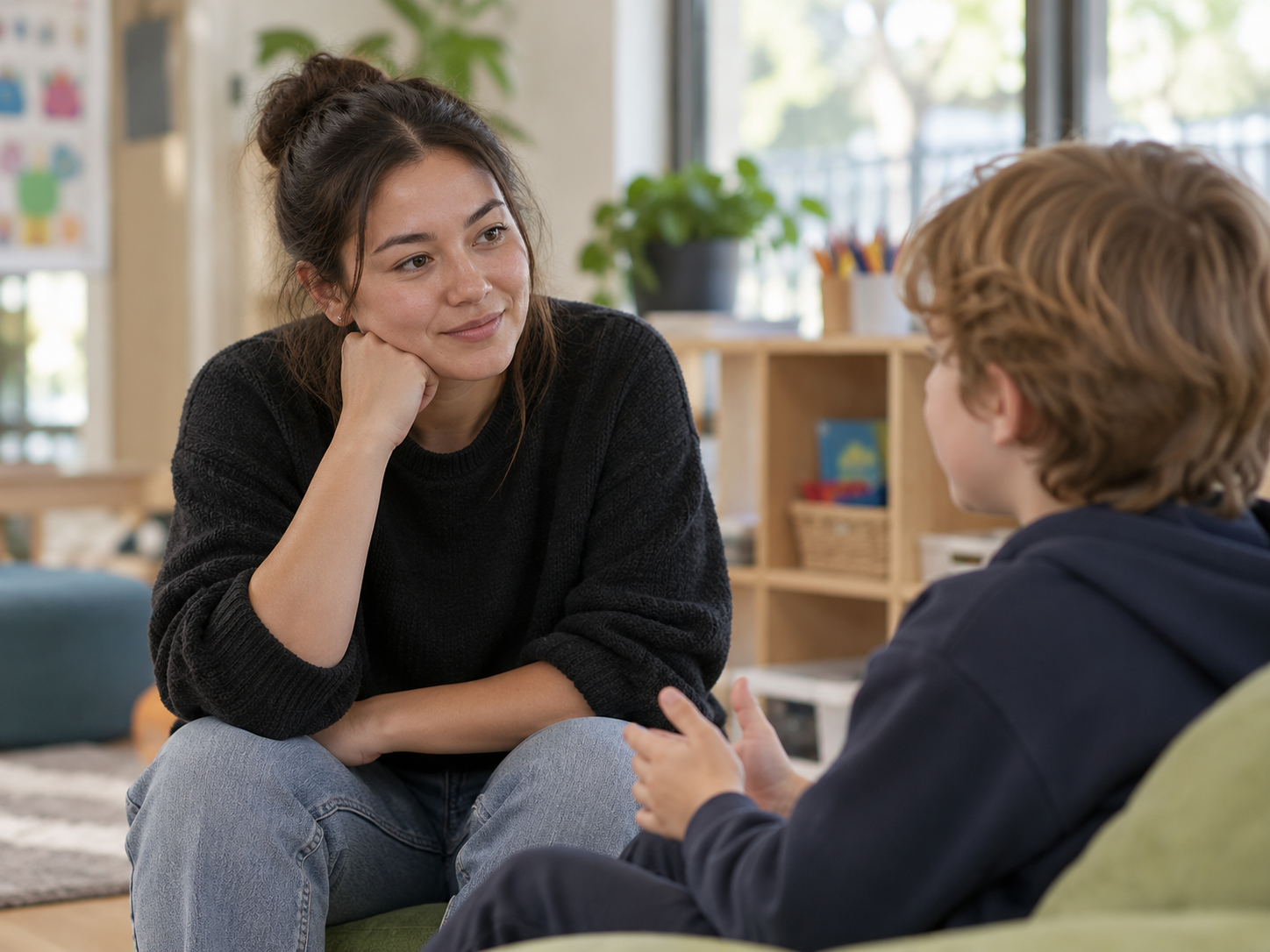
This focus area looks at how educators build positive, respectful relationships with children and young people and help them build respectful relationships with others. Drawing on children’s rights, the National Law and Regulations, Quality Area 5 and My Time, Our Place, it covers inclusion, social and emotional learning, co-regulation and conflict resolution. You will also learn your legal responsibilities around inappropriate discipline and inappropriate conduct, so every child’s safety, dignity and rights are upheld.

Learning objectives

By the end of this course, you will be able to:

  • Identify the UNCRC articles that relate to building positive relationships with children in OSHC
  • Apply paramount consideration as the foundation of your interactions with children.
  • Explain the requirements of Regulations 155 and 156
  • Use practical strategies to build respectful relationships with children
  • Describe how My Time, Our Place and relational pedagogy guide relationship-building in OSHC
  • Apply inclusive practice, including building on children’s strengths and making reasonable adjustments
  • Support children’s social and emotional learning
  • Use co-regulation strategies to support children
  • Guide children through a problem-solving approach to resolve conflict respectfully
  • Recognise inappropriate discipline and inappropriate conduct
  • Connect children’s rights, legislation and relational practice to your everyday responsibilities as an educator

Lessons for this module

1. Focus Area 3: Relationships With Children and Young People Including Behaviour Guidance and Support

Learning Objectives: This module will also explore how Educators build positive and respectful relationships with children and young people and how they support children and young people to build respectful relationships with others. The learning from this module will support Educators to build positive and respectful relationships that uphold the safety, rights and best interests […]

Approx Duration 4 min
2. United Nations Convention on the Rights of the Child

The United Nations Convention on the Rights of the Child (UNCRC) is an international treaty that outlines key civil, economic, political, social and cultural rights for all children and young people. Key articles in the United Nations Convention on the Rights of the Child that relate to building positive and respectful relationships in Outside School […]

Approx Duration 4 min
3. The Paramount Consideration

The safety, rights and best interests of children is required to be the paramount consideration in operation and delivery of all Education and Care services. This is legal requirement under the Education and Care Services National Law (section 2A) that applies to all individuals including:

Approx Duration 4 min
4. Education and Care National Law and Regulations

Regulation 155: Relationships with Children Educators must provide education and care in ways that: Regulation 156: Relationships in Groups Reasonable steps be taken to ensure that children be provided with opportunities to interact and develop respectful and positive relationships with each other and with staff members and volunteers of the service; including having regard to […]

Approx Duration 4 min
5. Quality Area 5 of the NQS – Relationships with Children

Quality Area 5 – Relationships with Children has two Standards with each Standard having two elements: Educators can build positive relationships with children through: Positive Interactions Focusing on improving daily interactions can strengthen positive respectful relationships. Educators can support this in the following ways: Listening to Children Listening to children is an important part of […]

Approx Duration 4 min
6. My Time, Our Place and Relational Pedagogy

In practice, educators can:

Approx Duration 4 min
7. Inclusion

Reasonable Adjustment Is a measure or action taken by Approved Providers and Educators to assist children and young people with disability to participate and engage on the same basis as children and young people without disability. An adjustment is reasonable if it achieves this purpose while balancing the interests of all parties affected, including the […]

Approx Duration 4 min
8. Case Study: A Place in the Game
Approx Duration 4 min
9. Social and Emotional Learning

RULER is a widely recognised and evidence-based approach to supporting social and emotional learning that has been developed by the Yale Center for Emotional Intelligence. The RULER program is focused on supporting all adults, children and young people to learn to:  While there are a range of different programs available, what is vital to remember […]

Approx Duration 4 min
10. Supporting Regulation

Connection Before Correction In understanding the brain’s response to stress, neuroscientist Dr Bruce Perry, has shown that heading straight to the “reasoning” part of the brain in times of crisis, is not the best approach. If a child is dysregulated or disconnected, educators will need to intervene in a simple sequence: Regulate → Relate → […]

Approx Duration 4 min
11. Problem Solving Approach to Conflict

Through applying a problem-solving framework to conflict resolution educators can coach school age children in these techniques. In this way, children can be taught how to use the following framework to discuss their differences and resolve problems or conflict respectfully. This framework has been adapted from Betsy Evans’ work around conflict resolution for young children:

Approx Duration 4 min
12. Inappropriate Discipline, Inappropriate Conduct and Reportable Conduct

Inappropriate Discipline (National Law, Section 166) ‘Discipline’ is a term that is often associated with ‘punishment’ and does not reflect contemporary research and understanding about how children’s learning and development are best supported. Under section 166 of the National Law, a child or young person attending an education and care service must not be subjected […]

Approx Duration 4 min
13. Bringing it all Together

As highlighted in this module, the importance of building positive and respectful relationships with children and young people; and supporting children and young people to build respectful relationships with others; is central to the role of every educator. The importance of positive and respectful relationships is embedded throughout the National Quality Framework, reflecting the commitment […]

Approx Duration 4 min